
Handle and Use a Handgun for Business Purposes

- Description
- Curriculum
- Reviews
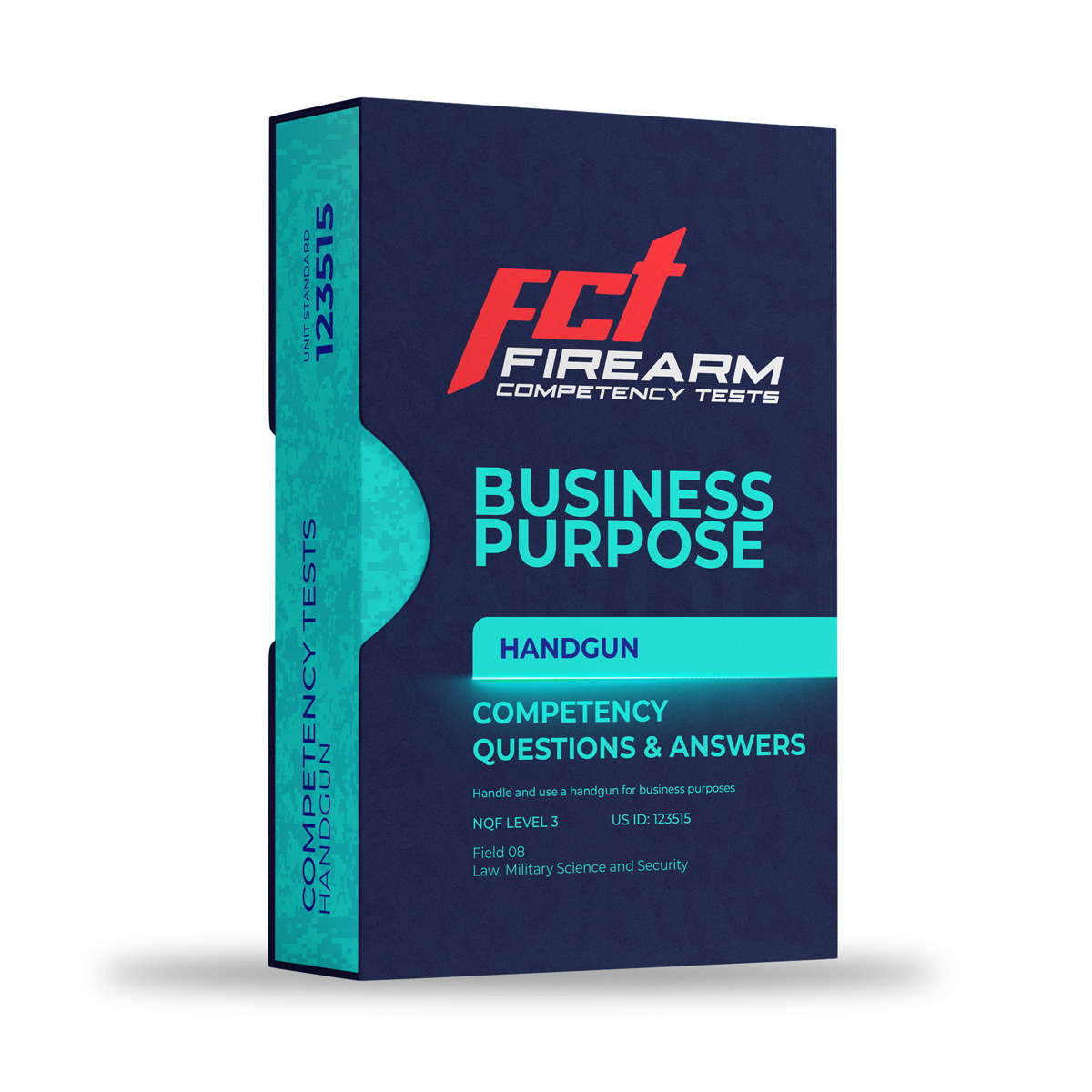
Handle and Use a Handgun for Business Purposes
Handle and Use a Handgun for Business Purposes is an online practice course designed for South African learners preparing for handgun competency in a professional or business environment.
This course goes beyond ordinary handgun competency preparation by focusing on the additional knowledge and responsibilities associated with using a handgun as part of your work.
It is suitable for learners preparing for competency aligned with SAQA Unit Standard 123515: Handle and Use a Handgun for Business Purposes.
This course is a study and preparation resource. It does not replace accredited firearm training or an official competency assessment.
You will receive access to:
- 200 practice questions
- Single-answer and multiple-choice questions
- Immediate feedback after answering
- Online access from a smartphone, tablet, laptop or desktop computer
- 30 days of access from the date of purchase
What Does Handgun Competency for Business Purposes Mean?
Business-purpose handgun competency applies to people who may need to handle or use a handgun as part of their employment or professional responsibilities.
The focus is not only on safe firearm handling, but also on understanding the responsibilities, procedures and standards expected when a firearm is used in a workplace or professional context.
The practice questions are designed to help reinforce these business-purpose knowledge areas alongside core handgun competency principles.
What the Business-Purpose Handgun Practice Test Covers
The practice questions focus on knowledge relevant to the safe and responsible handling of a handgun for business purposes.
Topics may include:
- handgun safety
- professional firearm responsibilities
- safe handling procedures
- handgun parts and components
- loading and unloading principles
- firearm condition and readiness
- safe storage and control
- workplace firearm procedures
- situational awareness
- shooting fundamentals
- malfunctions
- cleaning and maintenance
Handgun Safety in a Business Environment
Using a handgun in a professional environment carries additional responsibility.
Learners should understand the importance of:
- maintaining control of the firearm
- following workplace procedures
- handling the handgun safely at all times
- preventing unauthorised access
- maintaining awareness of people and surroundings
- following lawful and authorised procedures
The aim is to reinforce safe, disciplined and responsible firearm behaviour in a professional context.
Understanding Handgun Components
A working knowledge of handgun components helps learners understand how the firearm functions and how it should be handled safely.
Practice questions may cover:
- major handgun components
- controls and safety features
- magazine systems
- ammunition basics
- firearm condition
- basic operating principles
Loading and Unloading
Safe loading and unloading form an important part of handgun competency.
The practice material helps reinforce principles such as:
- checking the firearm’s condition
- safe loading
- safe unloading
- maintaining muzzle awareness
- keeping the firearm under control
- confirming the handgun’s condition after handling
Shooting Fundamentals
Business-purpose handgun competency also requires an understanding of fundamental shooting principles.
Topics may include:
- stance
- grip
- aiming principles
- sight alignment
- trigger control
- recoil management
- follow-through
Professional Responsibility and Situational Awareness
Business-purpose firearm competency includes more than knowing how a handgun works.
Learners should also understand the importance of professional judgement, awareness and accountability when a firearm forms part of their work responsibilities.
This may include:
- following employer procedures
- maintaining control of issued or authorised firearms
- understanding professional responsibilities
- maintaining situational awareness
- acting within lawful and authorised boundaries
- reporting firearm-related incidents appropriately
Handling Malfunctions
Recognising that a firearm has not operated as expected is an important part of safe handgun competency.
The practice questions help reinforce the safety principles that should be followed when a malfunction occurs.
Cleaning and Maintenance
Routine maintenance helps keep a handgun in a safe and serviceable condition.
Learners should understand the basic principles of:
- safe preparation before cleaning
- basic cleaning procedures
- inspection of the handgun
- routine maintenance
- safe reassembly and condition checks
How the Practice Test Works
The business-purpose handgun practice test includes structured single-answer and multiple-choice questions.
You receive feedback after answering questions, allowing you to identify areas that may require further revision.
The aim is not simply to memorise answers. Use the questions to strengthen your understanding of the handgun, professional responsibilities and the principles covered during accredited business-purpose firearm training.
Who Should Use This Practice Test?
This course is designed for South African learners preparing for handgun competency where the firearm may be used as part of their work or professional duties.
It may be relevant to:
- security personnel
- armed response personnel
- employees required to carry or use a handgun for business purposes
- security company employees
- firearm instructors
- learners preparing for business-purpose handgun competency
- individuals refreshing existing professional handgun knowledge
This practice course is a supplementary study resource and does not replace accredited training or assessment.
Need Standard Handgun Competency Instead?
This course focuses specifically on handgun competency for business purposes.
If you only need ordinary handgun competency preparation, use the Handgun Competency Practice Test.
Need Firearms Control Act Practice?
If you also need to revise South African firearm legislation, use the Firearms Control Act 60 of 2000 Practice Test.
Online Access
Your business-purpose handgun practice test will remain available for 30 days from the date of purchase.
You can access the quiz online using:
- smartphone
- tablet
- laptop
- desktop computer
To access the questions, register on the website, purchase the course and log in to your account.
Need Help?
For common questions about access, purchases and firearm competency practice tests, visit our FAQ page.
You can also contact us directly if you require assistance.
Useful Resources
SAPS Firearms Control Act 60 of 2000
SAQA Unit Standard 123515: Handle and Use a Handgun for Business Purposes





 Google